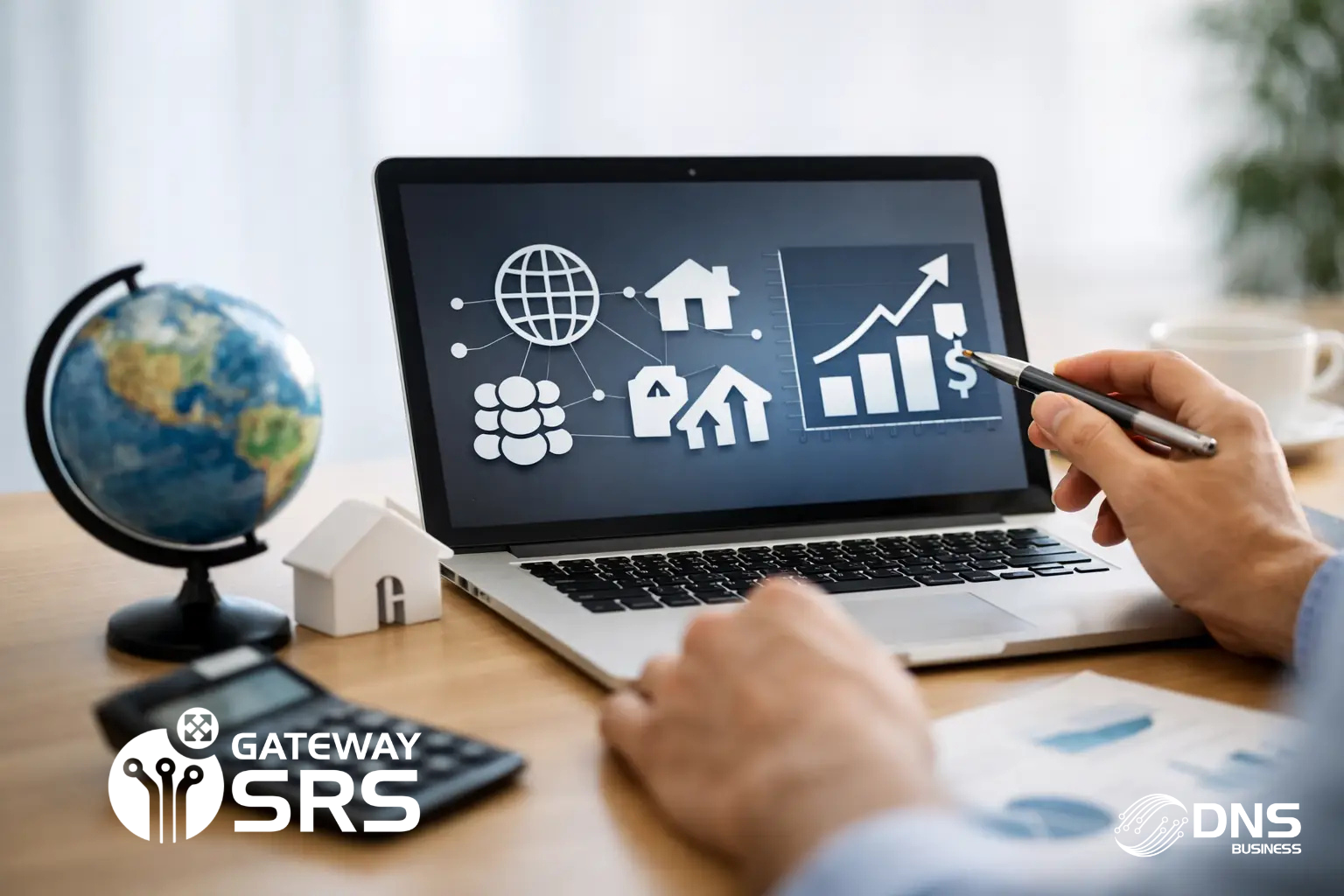

A domain business usually feels fragmented before it looks fragmented on paper. One registry uses one workflow, another requires a different integration, support requests live in separate systems, and renewals become a calendar problem instead of an operational process. That is why more registrars, resellers, hosting providers, and portfolio owners are looking to manage domains in one platform rather than keep adding one-off registry relationships.
For teams working across multiple TLDs, consolidation is not just administrative convenience. It affects cost control, service reliability, migration planning, and the ability to grow without rebuilding the same operational layer every time a new extension is added.
What it really means to manage domains in one platform
At a practical level, centralized domain management means using one operating layer to handle registrations, renewals, transfers, contact objects, nameserver changes, DNS-related object updates, reporting, and support workflows across a broad set of TLDs. The point is not merely to see all domains in one dashboard. The point is to reduce the number of technical and operational systems your team has to maintain.
That distinction matters. A portfolio can look centralized from the front end while still relying on scattered registry logic behind the scenes. When that happens, your team continues to absorb the complexity through custom scripts, exception handling, manual reconciliation, and inconsistent provisioning behaviour.
A true single-platform approach replaces that patchwork with one integration model and one administrative center. For technical teams, that might mean EPP XML or JSON API access. For commercial or support teams, it may mean a web portal that provides backup administration without requiring registry-level expertise.
The operational problem with fragmented domain management
Most domain businesses do not choose fragmentation because it is a better long-term model. They end up there because growth happens in stages. A reseller starts with a narrow set of extensions, adds a registry partner for a new market, then adopts another provider because of pricing or availability. Over time, the stack becomes harder to manage than the domain portfolio itself.
That creates pressure in places that are easy to underestimate.
Provisioning logic becomes inconsistent. Your team may support one transfer workflow for some TLDs and a different one for others. Renewal handling can vary by supplier, which increases the chance of billing disputes or service mistakes. Reporting becomes less reliable because portfolio data sits across multiple interfaces and systems of record.
Support overhead rises as well. If a customer asks why a domain failed to renew, your operations team may need to check several platforms before they can answer with confidence. If a nameserver update does not apply as expected, the issue may be buried in a supplier-specific process rather than visible in one operational queue.
None of this is dramatic in isolation. At scale, it becomes a drag on margin, response time, and team capacity.
Why consolidation improves scale
When you manage domains in one platform, scale starts to look different. Adding inventory is no longer tied to standing up another supplier relationship from scratch. Your business can expand TLD coverage through an existing operational framework rather than layering on new administrative work each time demand changes.
This is where centralized infrastructure has real business value. A single integration reduces engineering duplication. A single portfolio view improves oversight. A single process model makes training easier for operations and support teams.
It also improves resilience. If your business depends on recurring renewals and transfer activity, repeatability matters more than novelty. Teams need predictable behavior across domain lifecycle events. They need confidence that object management, provisioning, and account controls will work in the same general way across a broad inventory base.
There is still nuance here. A single platform does not eliminate every TLD-specific rule. Some registries have unique compliance requirements, transfer policies, or object structures. But centralization means those differences are managed within one framework instead of pushed onto your team through separate supplier relationships.
Integration options matter more than a dashboard
A common mistake in platform selection is overvaluing the interface and undervaluing the operating model. A clean portal is useful, but domain businesses usually need more than a visual control panel.
If you are running custom storefronts, automated provisioning, or downstream reseller systems, API quality matters. If your business already uses registrar-grade tooling, EPP support may be essential. If your commercial team needs to handle urgent updates without waiting on engineering, a web portal is equally important.
The right platform usually supports multiple management methods because domain operations are rarely owned by one team alone. Engineering may want direct integration. Operations may need bulk actions and reporting. Finance may require clearer renewal visibility. Support may need immediate access to status and object changes.
That mixed environment is normal. The best way to manage it is not to force every user into a technical workflow or every technical use case into a manual portal. It is to choose infrastructure that supports both.
Migration is where consolidation succeeds or fails
The decision to centralise often makes sense on paper long before a business is ready to move. That hesitation is understandable. Domain migrations involve live assets, customer expectations, renewal timing, authorisation processes, and registrar-specific exceptions. If the transition is poorly handled, the operational cost can outweigh the strategic benefit.
This is why migration support should be treated as part of the platform, not an extra service. A provider that can centralize management but leaves onboarding, transfer planning, and exception handling to your team is only solving part of the problem.
A professionally managed migration reduces risk in three ways. First, it shortens the time between decision and operational value. Second, it limits the burden on internal staff who already have day jobs. Third, it improves data consistency during the move, which matters for renewals, nameserver integrity, and customer communication.
For larger portfolios, phased migration can make more sense than a single cutover. That depends on your TLD mix, customer base, and existing supplier structure. Some businesses benefit from moving active revenue-generating inventory first. Others prioritize extensions with the highest operational friction. There is no universal sequence, but there should be a deliberate one.
Pricing transparency is part of platform strategy
Consolidation discussions often focus on technical simplicity, but the economics matter just as much. A platform that reduces overhead can still become expensive if pricing is opaque or renewal rates are difficult to forecast.
For domain businesses, margins are shaped over time by recurring transactions, not just initial registrations. If a supplier uses attractive entry pricing and recovers margin through inflated renewals or hidden administration costs, centralization does not really improve the business. It just moves the pain into a different line item.
That is why transparent pricing is operationally relevant, not just commercially attractive. It supports forecasting, product planning, and customer pricing decisions. It also helps resellers avoid the instability that comes from having to rework retail pricing because wholesale costs were not clear from the start.
When a single platform is not enough by itself
Centralisation is powerful, but it is not a magic fix for weak internal process design. If your billing logic is inconsistent, if your support escalation paths are unclear, or if your customer lifecycle data is spread across disconnected systems, one platform will help but it will not solve everything alone.
The strongest results come when platform consolidation is matched with process discipline. That means standardised renewal rules, clearer ownership between engineering and operations, better exception reporting, and a realistic view of which tasks should be automated versus manually reviewed.
It also means choosing a platform that fits your operating model. A sophisticated registrar may prioritise protocol-level control and passthrough services. A reseller business may care more about broad TLD access, wholesale economics, and easy administration. A hosting provider may need strong integration with an existing billing stack such as WHMCS. The goal is the same, but the best implementation depends on how your business actually runs.
A better way to add TLD coverage
The hidden cost of expansion is rarely the new extension itself. It is the work required to support that extension properly over time. Every new registry relationship can introduce more onboarding, more compliance handling, more support knowledge, and more technical maintenance.
A centralized platform changes that equation. Instead of treating each new TLD as a separate operational project, your business can add inventory through one established framework. That is a simpler path to growth, especially for teams that want to broaden their offering without increasing headcount at the same rate.
This is the practical case for providers such as Gateway SRS. The value is not only broad extension access. It is the ability to onboard once, manage through a single technical and administrative layer, and keep portfolio growth from turning into operational sprawl.
For domain businesses that plan to scale, the question is not whether complexity will appear. It will. The real decision is whether your team will manage that complexity directly or place it inside infrastructure designed to carry it. That choice shapes how efficiently you grow from here.